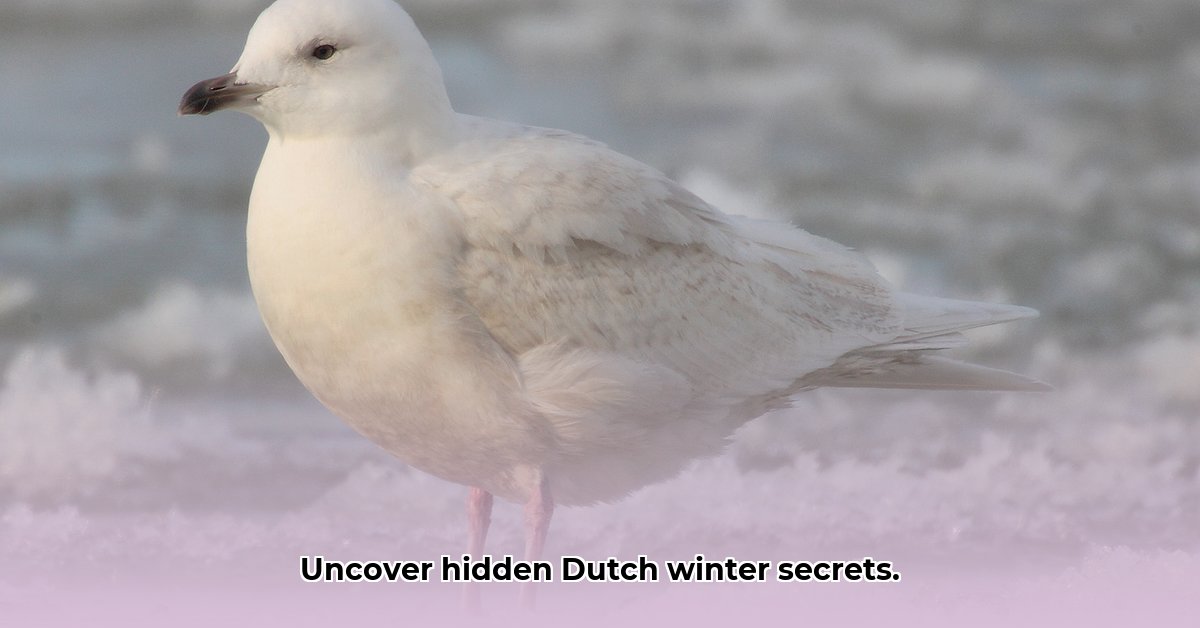
Kleine En Grote Burgemeester Vogelsoort: Unlocking the Secrets of the Large Burgomaster Gull in Holland
The Large Burgomaster Gull (Larus hyperboreus), or Kleine En Grote Burgemeester Vogelsoort in Afrikaans, is a rare winter visitor to the Netherlands. Sightings are infrequent, typically numbering in the hundreds at most, making each observation a special treat for avid birdwatchers. But why such low numbers? This question forms the core of ongoing scientific investigation. Understanding the factors driving this limited wintering population is crucial for effective conservation strategies. Have you ever wondered what makes this majestic bird so elusive in Dutch waters?
Spotting the Difference: A Birder's Challenge
Distinguishing a Large Burgomaster Gull from similar species, particularly the Lesser Black-backed Gull, presents a significant challenge, even for experienced ornithologists. The similarity, especially in winter plumage, demands careful observation of subtle differences in size, beak shape, and head markings. It's a bit like identifying subtle differences between two very similar coins – you need that keen eye! How many times have even expert birders needed a second look to confirm an identification? It highlights the need for improved identification techniques.
A Worrying Trend: Conservation Concerns
While globally the Large Burgomaster Gull population remains stable, the low numbers wintering in the Netherlands raise justifiable concerns. Factors such as habitat loss, pollution from human activities (e.g. industrial waste), and hunting pressures in their breeding grounds could significantly impact this vulnerable population. Unravelling the extent to which these threats influence the Dutch wintering population is paramount for effective conservation action. What strategies can we implement to address these threats effectively?
The Detective Work: Monitoring and Research
Effective protection requires robust data collection. This means implementing enhanced monitoring programs to obtain accurate population estimates and improving identification methodologies to guarantee consistent survey data. Such initiatives demand collaboration between ornithological societies and government agencies – a truly collaborative effort! What mechanisms can create a successful partnership in this vital research?
Giving these Gulls a Fighting Chance: A Plan for Action
Several key steps can improve the prospects for the Large Burgomaster Gull in the Netherlands:
Enhanced Monitoring: Dutch birdwatching groups need to intensify monitoring efforts, focusing on precise identification techniques and meticulous data recording.
Habitat Protection: Strengthened enforcement of wildlife protection laws is essential to minimise habitat disruption and coastal pollution. A cleaner environment is crucial.
Advanced Research: In-depth studies of the bird's physical characteristics and genetics are required to confidently distinguish it from similar species and investigate potential interbreeding. Modelling the impact of climate change on its distribution is also key. This will give us vital insights into their future needs.
Working Together: A Collaborative Approach
Conserving the Large Burgomaster Gull in the Netherlands demands a unified effort. Dutch bird societies, government agencies, and researchers must collaborate effectively. This comprehensive approach is crucial for enduring conservation success. What collaborations are already present, and how might we enhance this collective effort?
The Risks and How to Tackle Them
The following table summarises the key risks facing the Large Burgomaster Gull and potential mitigation strategies:
| Risk Factor | Likelihood | Impact | Mitigation Strategies |
|---|---|---|---|
| Habitat Destruction | Medium | High | Habitat restoration, stricter development controls, pollution cleanup |
| Marine Pollution | Medium | High | Stringent controls on industrial waste, regular water quality monitoring |
| Climate Change | High | Medium | Research into climate change impacts, proactive conservation adaptation |
| Hunting in Breeding Areas | Low | High | International cooperation on sustainable hunting practices |
| Competition for Food | Medium | Low | Further research into interspecies resource competition |
The future of the Large Burgomaster Gull in the Netherlands depends on our commitment to research, conservation, and collaborative action. Preserving this magnificent bird for future generations is a worthy endeavour. What steps will you take to contribute to its conservation?
How to accurately identify Large Burgomaster Gulls in the Netherlands during winter
Identifying a Grote Burgemeester (Large Burgomaster Gull) requires careful observation.
Distinguishing Features: Size Matters (and Colour Too!)
The Large Burgomaster's substantial size is often the first distinguishing feature. However, size alone isn't sufficient for definitive identification. Adult birds exhibit a predominantly pale head and body, with a light grey mantle and dark wingtips. The Iceland Gull (Larus glaucoides) shares similar features, necessitating a closer inspection. How do you approach accurate identification in the field?
Examine the primary flight feathers: in adult Large Burgomasters, these are typically entirely dark, unlike the Iceland Gull, which often shows white. The bill is another key identifier: large, strong, and yellow, often with a red spot near the tip.
Age and Plumage: A Gull's Changing Appearance
Identifying younger birds is more challenging due to their brown and speckled juvenile plumage, which gradually changes to adult plumage over several years. Remember, significant variation exists within the species.
Habitat and Behaviour: Where and How to Find Them
Large Burgomasters favour coastal areas, often near harbours and estuaries, foraging along shorelines. Their behaviour around humans varies.
Common Mistakes and Confusions
The main confusion arises with Iceland Gulls. Concentrate on size, bill colour, and the primary flight feathers. Careful and patient observation is essential.
Key Takeaways:
- Size: Significantly larger than other gulls.
- Bill: Large, yellow bill, often with a red spot.
- Wingtips: Dark, with entirely dark primary flight feathers in adults.
- Plumage: Adults have mostly white heads and bodies, and a light grey mantle.
- Patience: Accurate identification needs time and careful observation.